What can pupils learn from a Roman Britain school trip?
Roman Britain is a key topic within the Key Stage 2 history curriculum, covering the Roman Empire and its impact on Britain. Visits to archaeological sites, museums and reconstructed buildings allow pupils to investigate historical evidence and explore how life changed under Roman rule.
Depending on the destination, a Roman school trip can help students explore:
- Conquest and rebellion: The Roman invasion, Boudica’s revolt and resistance to Roman occupation.
- Roman roads and engineering: How roads, forts, bathhouses, aqueducts and heating systems were built and used.
- Military life: The experiences of soldiers stationed in Britain, particularly along Hadrian’s Wall.
- Everyday life: How Roman towns, villas, markets and public buildings functioned.
- Religion and culture: Roman gods, local beliefs and the spread of Christianity.
- Archaeology: How objects, buildings, inscriptions and written evidence help historians interpret the past.
Roman Britain School Trips in London, South East & East England
London Mithraeum, London
Hidden beneath the City of London, the London Mithraeum contains the remains of a Roman temple dedicated to Mithras. An atmospheric presentation helps visitors imagine the religious ceremonies that took place here nearly 2,000 years ago.
Curriculum links: Roman religion, archaeology, cultural diversity and historical interpretation.
Teaching idea: Ask students why some Romans worshipped Mithras and what the temple reveals about the different beliefs practised in Roman London.
Planning tip: Entry is free, but check advance booking arrangements and available school resources.
Guildhall Roman Amphitheatre, London
Beneath Guildhall Art Gallery lie the remains of London’s Roman amphitheatre, once used for public entertainment and spectacles. The surviving walls and displays help pupils understand the importance of entertainment in the Roman world.
Curriculum links: Roman London, entertainment, architecture and archaeology.
Teaching idea: Before exploring the remains, use the outline marked in Guildhall Yard to help pupils estimate the size and capacity of the original arena.
Colchester Castle, Essex
Colchester is particularly valuable for exploring the Roman conquest and Boudica’s rebellion. Originally established as an important Roman settlement, the town was destroyed during the uprising of AD 60 or 61. Colchester Castle Museum displays Roman objects and archaeological evidence, including material connected with the town’s early history.
Curriculum links: Claudius’s invasion, Boudica’s revolt, Roman towns and the interpretation of historical evidence.
Teaching idea: Ask pupils to compare Roman and British perspectives on the conquest. Why might some communities have resisted Roman rule while others cooperated?
Teachers can consult the Colchester Castle visitor information when planning their visit.
Fishbourne Roman Palace, West Sussex
Near Chichester, Fishbourne Roman Palace contains the remains of an exceptionally large and luxurious Roman residence. Its mosaics, gardens and surviving foundations provide a fascinating insight into wealth, architecture and daily life in Roman Britain.
Curriculum links: Roman villas, social hierarchy, art, architecture and engineering.
Teaching idea: Compare the layout and facilities of the palace with an ordinary Roman home. What can buildings tell us about the wealth and status of their occupants?
Fishbourne also offers educational activities exploring Roman life, archaeology and technology. See its school learning programme for available sessions.
Lullingstone Roman Villa, Kent
Lullingstone Roman Villa offers evidence of changing beliefs and domestic life in Roman Britain. The villa developed over several centuries and contained a heated bath suite, religious wall paintings and a Christian house-church.
Curriculum links: Roman homes, religion, Christianity, conservation and archaeology.
Teaching idea: Explore what the villa’s religious features reveal about the changing beliefs of its inhabitants.
Planning tip: Lullingstone has been closed for essential conservation work, with school visits affected. Check the English Heritage school visits page before making plans. Outreach and classroom resources may be available while on-site education visits are suspended.
Roman Britain School Trips in Central England & the Midlands
Wroxeter Roman City, Shropshire
Once one of the largest cities in Roman Britain, Wroxeter offers an opportunity to explore the remains of a Roman town. Pupils can discover its public baths, streets and reconstructed townhouse while investigating how Roman urban communities developed.
Curriculum links: Roman towns, engineering, architecture, public health and trade.
Teaching idea: Compare the reconstructed townhouse with the surviving archaeological remains. How do historians and archaeologists decide what missing buildings may have looked like?
Planning tip: The site includes substantial outdoor areas, so prepare for changeable weather and check the available school visit options.
The Lunt Roman Fort, Coventry
The Lunt is a reconstructed Roman fort with features that help students visualise military life in Roman Britain. One of its most distinctive elements is the gyrus, a circular structure generally associated with training horses.
Curriculum links: Roman military organisation, cavalry, construction and experimental archaeology.
Teaching idea: Investigate why cavalry troops needed different equipment, training and facilities from infantry soldiers.
Planning tip: Check current opening arrangements and educational visit availability before organising a group trip.
Roman Britain School Trips in Yorkshire & North East England
Vindolanda Roman Fort, Northumberland
Vindolanda is internationally known for its remarkable archaeological discoveries, particularly the Vindolanda writing tablets. These documents offer rare glimpses into everyday life on the Roman frontier, including military administration, personal correspondence and the experiences of people living around the fort.
Curriculum links: Roman frontier life, literacy, archaeology and primary historical sources.
Teaching idea: Examine translations of the writing tablets and ask pupils what written messages can reveal about individuals that buildings and weapons cannot.
Planning tip: Allow time for both the archaeological site and museum. Check which tablets are currently on display, as collections and exhibitions can change.
Housesteads Roman Fort & Hadrian’s Wall, Northumberland
Housesteads is one of the most complete Roman forts in Britain. Its dramatic position along Hadrian’s Wall helps pupils understand the scale of Roman frontier defences, while the remains of barracks, administrative buildings and latrines provide evidence of military life.
Curriculum links: Hadrian’s Wall, Roman military organisation, engineering and frontier defence.
Teaching idea: Ask pupils to investigate the different buildings inside the fort and explain how the garrison could live and operate in this remote location.
Planning tip: The fort is reached by an uphill walk from the parking area, and the exposed landscape can be windy. English Heritage offers school visits and educational resources.
Aldborough Roman Site, North Yorkshire
Aldborough, known to the Romans as Isurium Brigantum, was an important administrative centre associated with the Brigantes. Its Roman remains, including mosaic floors and town defences, provide evidence of urban life in northern Britain.
Curriculum links: Romanisation, town planning, local history and archaeology.
Teaching idea: Explore the relationship between Roman government and local communities. How might Roman rule have changed the lives of people living in this area?
Arbeia Roman Fort, South Shields
Arbeia played an important role in supplying the Roman frontier. Reconstructed buildings, including a gatehouse and barracks, help students visualise the fort and examine how provisions, equipment and people moved across the Roman Empire.
Curriculum links: Roman military logistics, transport, trade and construction.
Teaching idea: Challenge pupils to plan how they would supply a Roman garrison with food, clothing and equipment. What transport routes and resources would they need?
DIG: An Archaeological Adventure, York
For a hands-on introduction to archaeology, DIG in York offers an interactive experience where pupils excavate replica finds from different periods of the city’s history, including Roman York.
Rather than simply observing historical objects, students investigate archaeological evidence and discover how archaeologists reconstruct the past.
Curriculum links: Archaeology, historical enquiry, chronology and Roman Britain.
Teaching idea: Ask pupils to examine the objects uncovered during their excavation and explain what they reveal about the people who used them.
Explore DIG’s school visit information on Educational Visits UK, including group activities and enquiry details.
Roman Britain School Trips in North West England
Deva Roman Experience, Chester
Chester was an important Roman military centre, known as Deva Victrix. The Deva Roman Experience introduces pupils to the city’s Roman past through immersive displays and educational activities, including opportunities to explore Roman Chester with a costumed guide.
Curriculum links: Roman soldiers, military settlements, daily life and local history.
Teaching idea: Compare the lives of soldiers living in a legionary fortress with those of civilians in the surrounding settlement.
Planning tip: Some activities take place outdoors in the city centre. Confirm the itinerary and supervision arrangements when booking.
Roman Gardens, Chester
Chester’s Roman Gardens contain a collection of Roman architectural remains and reconstructed features, including elements representing a hypocaust heating system. The gardens provide a useful outdoor introduction to Roman engineering and the city’s archaeological heritage.
Curriculum links: Roman heating technology, architecture, archaeology and urban development.
Teaching idea: Ask pupils to draw and label how warm air circulated beneath the floors of a Roman building.
Planning tip: The gardens can complement a wider visit to Chester’s Roman attractions, although teachers should assess the suitability of the public space for their group.
Ribchester Roman Museum, Lancashire
Located near the River Ribble, Ribchester was the site of an important Roman cavalry fort. The museum displays discoveries from the local area and helps pupils explore military life, Roman equipment and the history of the settlement.
Curriculum links: Roman cavalry, local archaeology, military equipment and material culture.
Teaching idea: Investigate the famous Ribchester Helmet and discuss why some Roman military equipment was highly decorated.
Planning tip: The museum is relatively small, so confirm group capacity and available educational activities in advance.
Birdoswald Roman Fort, Cumbria
Birdoswald occupies an impressive position on Hadrian’s Wall, with substantial surviving remains of the fort and nearby stretches of the frontier barrier. It is an excellent location for exploring Roman military engineering and the organisation of frontier defences.
Curriculum links: Roman engineering, Hadrian’s Wall, military history and historical geography.
Teaching idea: Compare the surviving fort walls with modern defensive structures. What challenges would Roman engineers have faced when building in this landscape?
Planning tip: Check English Heritage’s current school visit arrangements and resources before booking.
Roman Britain School Trips in South West England
The Roman Baths, Bath
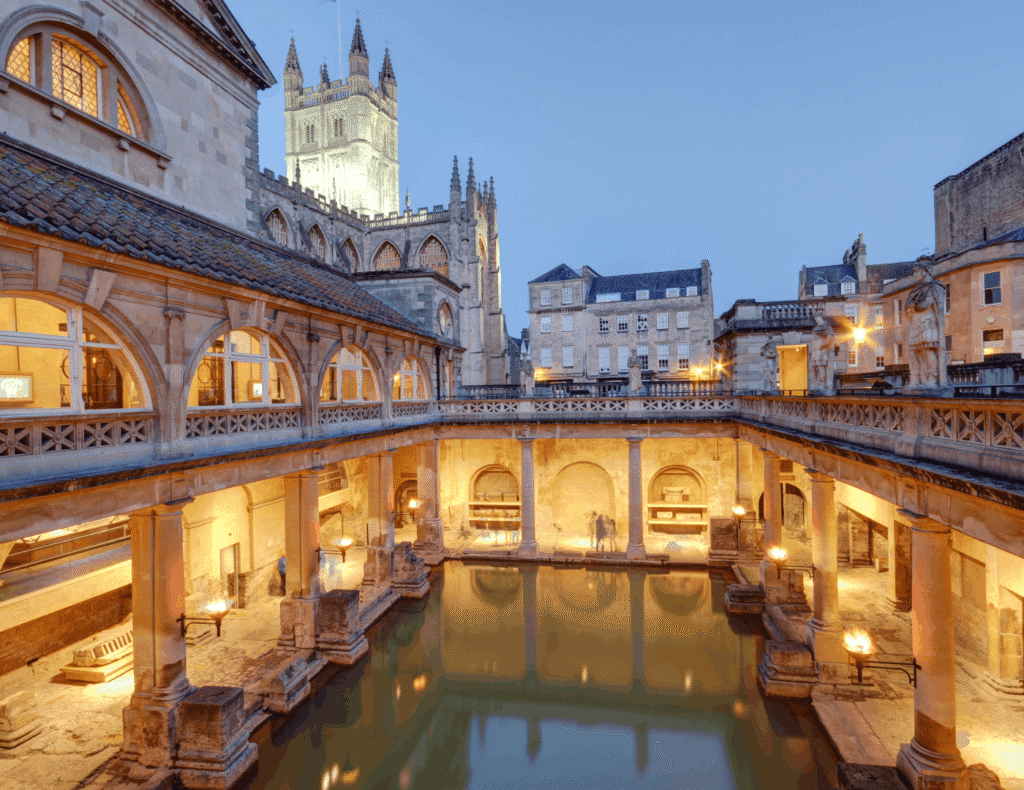
One of Britain’s most recognisable Roman sites, The Roman Baths provides an outstanding opportunity to explore Roman engineering, religion and social life.
Students can investigate the bathing complex, learn about the Temple of Sulis Minerva and discover how the natural hot springs influenced the development of the Roman settlement of Aquae Sulis.
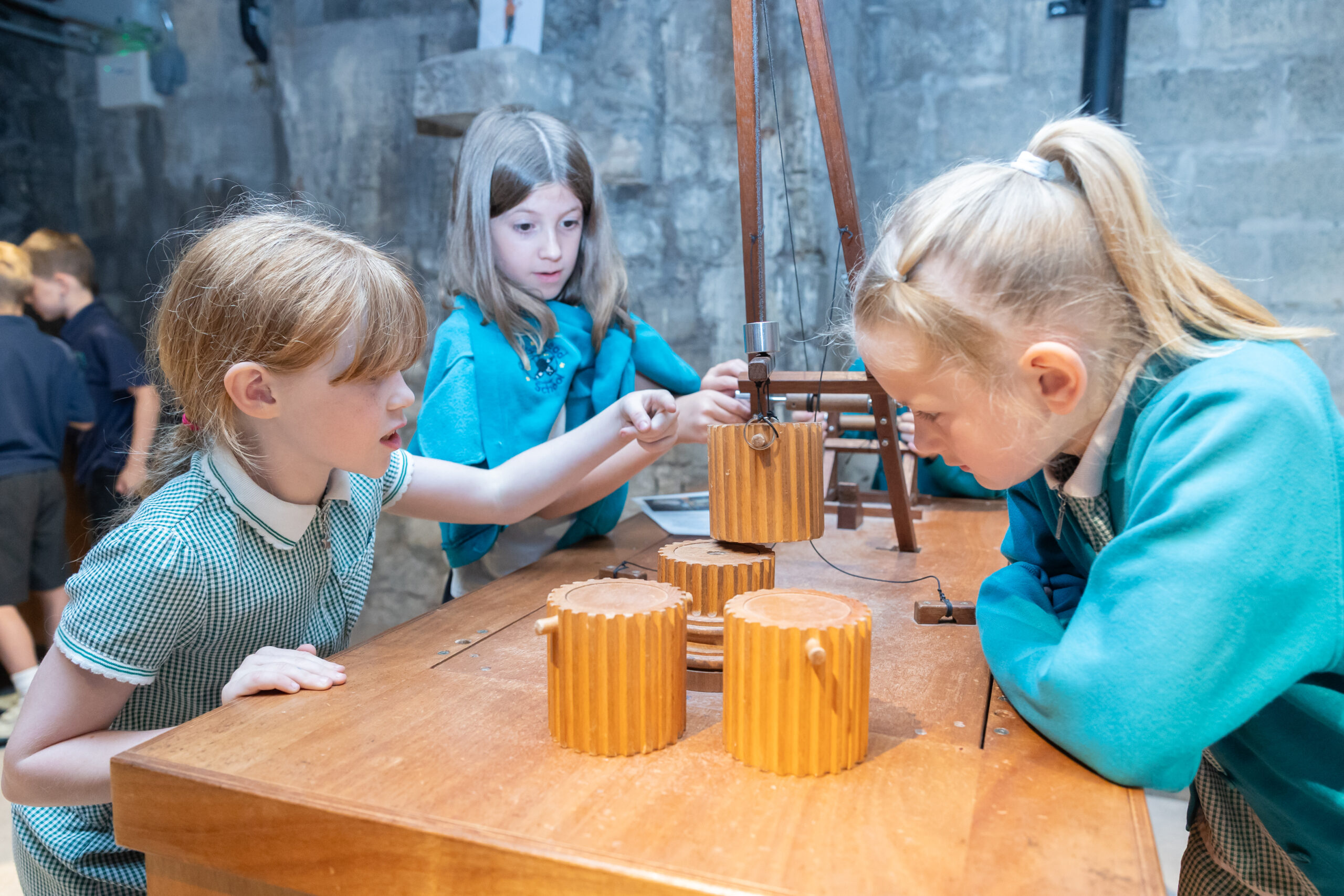
The Roman Baths also offers educational sessions at its Clore Learning Centre, where pupils can investigate Roman objects, archaeological evidence and building technology.
Curriculum links: Roman Britain, science, engineering, religion, archaeology and social history.
Teaching idea: Ask students to identify the different stages of a Roman bathing visit. How did Roman baths combine hygiene, leisure, social interaction and religious beliefs?
Planning tip: The thermal water is untreated and unsuitable for bathing or drinking. Book educational visits in advance and check current group arrangements.
Corinium Museum, Cirencester
Cirencester, known as Corinium in Roman times, was one of Roman Britain’s major towns. The Corinium Museum houses an important collection of Roman objects, including mosaics, sculptures and everyday artefacts.
Its educational programme provides opportunities for school groups to investigate Roman homes, identity, clothing, food and archaeology through practical activities and workshops.
Curriculum links: Roman towns, archaeology, Roman identity, art and everyday life.
Teaching idea: Compare evidence from objects associated with wealthy households and ordinary people. What does this tell us about social differences in Roman Britain?
Find out more about Corinium Museum’s school workshops and educational visits.
Chedworth Roman Villa, Gloucestershire
Set in the Cotswolds, Chedworth Roman Villa contains some of the finest surviving Roman mosaics in Britain, alongside bathhouse remains and other features associated with a prosperous rural household.
Curriculum links: Roman villas, social hierarchy, archaeology, art and conservation.
Teaching idea: Investigate how the villa’s layout, mosaics and facilities reflect the wealth of its occupants. What evidence suggests that the villa changed over time?
Planning tip: Check the National Trust’s current educational visit arrangements, particularly for group access and activities.
Roman Britain School Trips in Wales
National Roman Legion Museum & Caerleon, Newport
Caerleon was the location of an important Roman legionary fortress. The National Roman Legion Museum explores military life through archaeological collections, while nearby remains include Roman barracks and an amphitheatre.
Together, these sites help students understand the organisation of a Roman legionary base and the lives of the soldiers stationed there.
Curriculum links: Roman soldiers, military organisation, archaeology and Roman Wales.
Teaching idea: Compare the functions of the barracks, amphitheatre and other parts of the fortress. How did the Romans organise work, accommodation and leisure?
Planning tip: The museum and outdoor archaeological remains are separate locations. Check opening times, school activities and walking arrangements when preparing an itinerary.
Segontium Roman Fort, Caernarfon
Segontium was an important Roman fort in north-west Wales, established during the Roman conquest of the region. Its surviving foundations allow students to investigate how the Romans maintained a military presence in Wales.
Curriculum links: Roman conquest, military strategy, local history and archaeology.
Teaching idea: Explore why the Romans built a fort at this location. Consider the surrounding landscape, communication routes and nearby communities.
Planning tip: Check current access arrangements and Cadw’s educational resources before organising a visit.
Caerwent Roman Town, Monmouthshire
Known to the Romans as Venta Silurum, Caerwent preserves impressive stretches of Roman town walls and the foundations of buildings associated with a civilian settlement.
The site provides a valuable contrast to military forts, allowing students to explore how Roman-style towns developed in Wales.
Curriculum links: Town planning, Romanisation, civilian life and architecture.
Teaching idea: Ask pupils to sketch a plan of the Roman town, identifying the surviving walls and considering where people might have lived, traded and gathered.
Roman Britain School Trips in Scotland
The Hunterian Museum, Glasgow
The Hunterian Museum holds an important collection of Roman material associated with the Antonine Wall, including carved distance slabs recording the construction of sections of the frontier.
These objects provide evidence of the Roman army’s activities in Scotland and the use of inscriptions and imagery to communicate imperial authority.
Curriculum links: Roman Scotland, the Antonine Wall, art, propaganda and historical sources.
Teaching idea: Analyse the symbols and inscriptions on Roman distance slabs. What messages might the Roman army have wanted to communicate?
Planning tip: Confirm which Roman objects are currently displayed and whether school group activities are available.
Trimontium Museum, Melrose
Trimontium Museum explores the Roman military presence in southern Scotland through objects discovered at the nearby Roman fort and settlement. Its collections offer insight into military equipment, trade, everyday life and interactions between Roman soldiers and local communities.
Curriculum links: Roman frontiers, archaeology, military logistics and cultural exchange.
Teaching idea: Examine the range of objects recovered from the fort. What can they reveal about the origins, occupations and daily routines of its inhabitants?
Planning tip: Guided walks to the fort site may be available seasonally. Check arrangements with the museum before booking.
Bearsden Roman Bath House, East Dunbartonshire
Close to the Antonine Wall, Bearsden preserves the remains of a Roman bathhouse and latrine associated with a frontier fort. This compact archaeological site offers an opportunity to explore how Roman engineering supported everyday military life.
Curriculum links: Roman hygiene, public health, heating technology and engineering.
Teaching idea: Compare Roman bathing and sanitation systems with modern facilities. Which engineering principles are still relevant today?
Planning tip: As an outdoor archaeological site, Bearsden is best suited to a short, structured visit with clear learning activities prepared in advance.
How to Plan a Roman Britain School Trip
The best Roman Britain school trips connect the destination with clear learning objectives. Before booking, consider which aspects of the Roman period your pupils are studying and how the visit will develop their understanding.
Choose a site that matches your learning objectives
For a topic on Roman soldiers and frontier defence, a visit to Hadrian’s Wall or a Roman fort may be most appropriate. If your focus is daily life, social class or technology, a Roman villa, museum or bathhouse may provide richer opportunities.
Use archaeological evidence to encourage enquiry
Encourage pupils to examine objects, buildings and inscriptions rather than relying entirely on reconstructed scenes. Ask them to distinguish between what archaeologists have discovered and what historians have inferred from the evidence.
Compare military and civilian life
Where practical, combine two contrasting experiences. A fort and a civilian town, or a museum and an archaeological site, can help students develop a more balanced understanding of Roman Britain.
Connect Roman history with STEM subjects
Roman archaeological sites offer opportunities to explore engineering, design and materials science. Hypocaust systems can introduce heat transfer, while roads, arches and bathhouses provide examples of construction techniques, structural stability and water management.
Check practical arrangements before booking
Confirm school group availability, admission arrangements, coach access, accessibility, toilets, lunch facilities and supervision requirements. Some archaeological sites are exposed to the weather, while others have limited indoor space or seasonal opening arrangements.
Roman Britain School Trip FAQs
What are the best Roman Britain school trips for Key Stage 2?
Popular options include Roman forts, villas and museums with hands-on learning activities. The Roman Baths in Bath, Corinium Museum in Cirencester, DIG in York and sites along Hadrian’s Wall offer different ways to investigate the Roman Empire and its impact on Britain. The best choice depends on your learning objectives, location and pupils’ needs.
Where can pupils learn about Boudica’s rebellion?
Colchester is particularly relevant because the Roman town was destroyed during Boudica’s revolt in AD 60 or 61. Its archaeological collections can help pupils examine the causes and consequences of resistance to Roman rule.
Are Roman Britain school trips suitable for secondary school students?
Yes. Roman sites can support Key Stage 3 history, GCSE Classical Civilisation and wider studies of archaeology, imperial expansion, religion and society. Older students can investigate primary evidence, compare interpretations and explore the relationship between the Roman Empire and local populations.
Can schools explore Roman Britain without travelling to a historic site?
Yes. Museums and heritage organisations offer virtual sessions, educational resources and outreach activities. For example, the Roman Baths virtual learning sessions allow pupils to investigate Roman daily life and artefacts from the classroom.
Find More History School Trip Ideas
Roman Britain offers opportunities to explore far more than military conquest. From the everyday lives of ordinary people to sophisticated engineering and the challenges of governing an empire, the surviving evidence helps pupils understand how Roman rule shaped Britain.
Looking for more educational destinations? Explore school trip attractions across the UK or browse more school trip ideas to discover experiences linked to your curriculum.