World Ocean Day takes place every year on and around. Proposed as far back as 1992, ‘World Oceans Day’ was finally officially recognised by the United Nations in 2008. Marked in different ways across the globe, people across the planet are encouraged to act with campaigns, beach clean-ups, festivals and special events aplenty across the planet. World Ocean Day belongs to all groups and individuals, collectively, everywhere. It’s about how we can create a better future with an abundant ocean and a stable climate, by working together.
The students in your classrooms today will be tomorrow’s scientists, policymakers, engineers, and innovators. By celebrating World Oceans Day on 8 June 2026, your school helps nurture global awareness, curiosity, leadership and responsibility.
OUR OCEANS – We will all be familiar with the Atlantic, Pacific, Indian, Arctic and Antarctic Oceans (the unofficial 5th Ocean). It is imperative for us to protect and conserve the world’s oceans from global warming and overfishing. Even schools far from the sea depend on healthy oceans. What goes down our drains can reach rivers and rivers flow to the sea. The choices we make in classrooms, cafeterias and playgrounds truly matter.
DID YOU KNOW? – Oceans sustain our planet, contributing positively to the quality of air and they produce over half of the world’s oxygen. These ocean waters regulate the climate, support extraordinary biodiversity, provide livelihoods and food, and hold untapped scientific and medical potential.
WHY SHOULD SCHOOLS GET INVOLVED
Schools are uniquely positioned to Educate the next generation of environmental leaders, build lifelong sustainable habits, inspire community-wide change and connect science learning with real-world impact. World Oceans Day fits perfectly into science, geography, citizenship, sustainability and arts curricula. It’s hands-on, global and empowering.
Top Primary and Secondary School Ideas for World Ocean Day – including outdoor and nature-based school trips
Host a School Ocean Assembly – Share Ocean facts and short student presentations, invite a local marine biologist (in person or virtually), showcase ocean-themed artwork or poetry.
Organise a Plastic-Free Challenge – Encourage Reusable water bottles, waste-free lunches, a week without single-use plastics. Track your impact and celebrate the results!
Create Ocean Art Installations – Students can build sea creature sculptures from recycled materials, create hallway murals, design posters promoting ocean protection. Art helps make environmental messages memorable and visible.
Take Learning Outdoors – Conduct a local litter survey, adopt a nearby river or green space, organise a beach clean-up if you’re near the coast. Even small actions demonstrate collective responsibility.
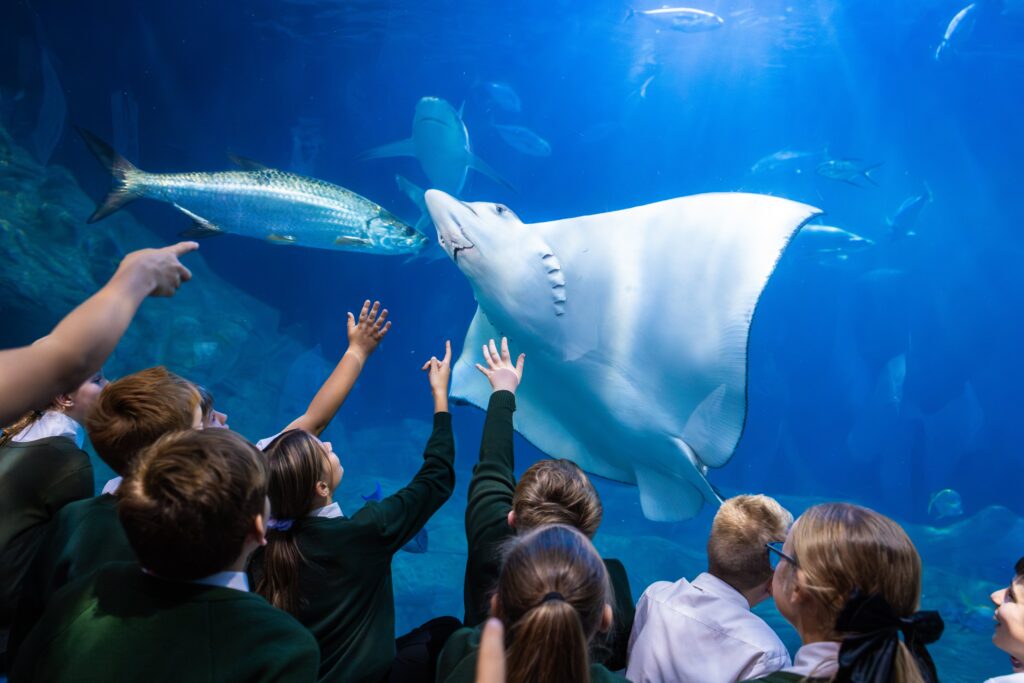
Explore Ocean Learning with the Ocean Conservation Trust. Their curriculum-linked programme at the National Marine Aquarium in Plymouth connects learners with the Ocean through inspiring aquarium visits, exciting classroom outreach and interactive virtual sessions. Discover experiences that enrich classroom learning and inspire students to become advocates for a healthier, sustainable Ocean. Alternatively, the Bournemouth Oceanarium is a great place to learn more about our oceans and how to protect our planet. An Oceanarium visit will fuel curiosity and enlighten your pupils in conservation, biodiversity and sustainability, paving the way for future conservationists.
WHAT IS THE 30×30
Together, we can make sure that our national leaders follow through on their commitments and ensure that at least 30% of lands, waters and ocean get protected by 2030. The World Ocean Day 2026 Action Theme – Strong Marine Protected Areas for Our Blue Planet – will guide global action over the coming years. It brings together the momentum of recent multi-year action themes and aligns powerfully with the recent ratification of the High Seas Treaty to protect biodiversity beyond national jurisdiction. World leaders have committed to 30×30 both within national waters and across the High Seas – an area covering two-thirds of the ocean and nearly one-half of Earth’s surface. Creating strongly regulated Marine Protected Areas (MPAs) is essential to turning global commitments into real conservation outcomes. Implementation will require collective effort, accountability and sustained public engagement.
Empowering the Next Generation
The ocean connects us all — and through education, schools can help protect it. For more information about World Ocean Day, check out https://worldoceanday.org/. It will feature new tools, resources and messaging for you to use as you wish, for World Ocean Day and throughout the year. It will also feature ideas and ways to get actively involved.