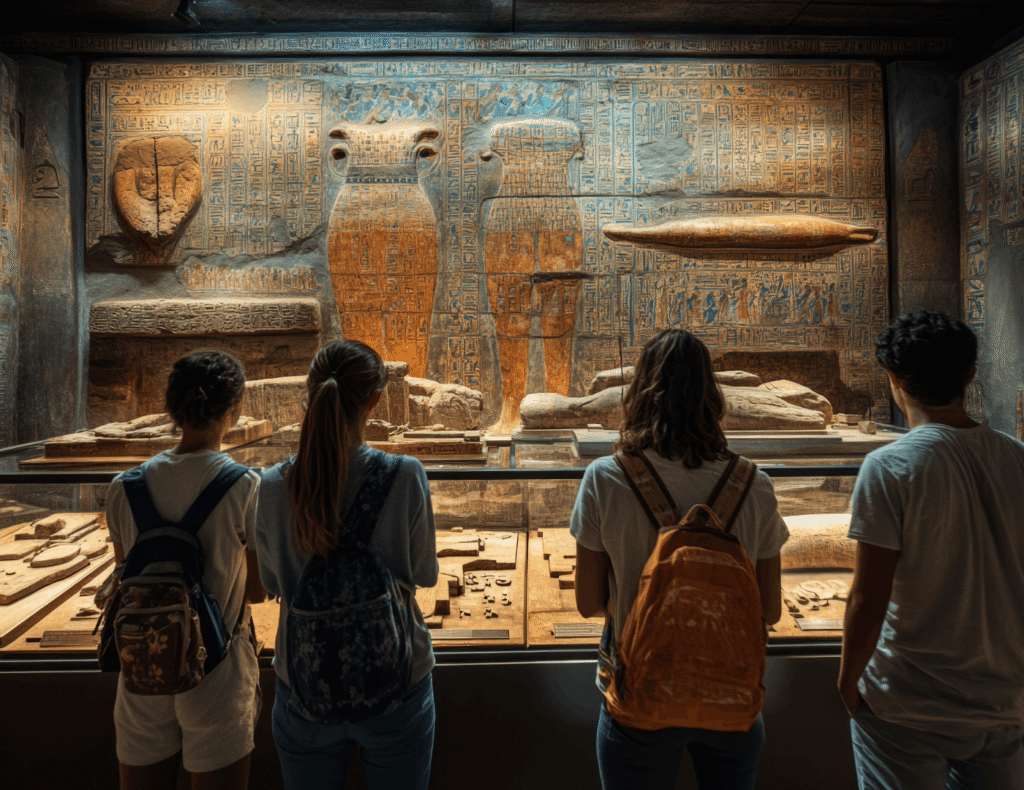
Ancient Civilisations School Trips in the UK: Museums, Workshops & Educational Visits

Ancient Civilisations School Trips in the UK: Museums, Workshops & Educational Visits

While the curriculum focuses on British history, the “Ancient Civilisations” module is where students develop a global perspective. In 2026, these trips are no longer just about “looking at statues”; they are about Ethical Archaeology, repatriation, and the preservation of global heritage.

London & South East

The British Museum (London):

  • The Experience: Seeing the Rosetta Stone (Egypt) and the Parthenon Sculptures (Greece). Students debate how these items arrived in London and their cultural significance.
  • Skills & Careers Links: International Law, Curation, and Diplomacy.
  • Teacher’s Pro-Tip: Book the “School Lunchroom” slot exactly 4 months in advance—it is the hardest thing to secure in London!

The Petrie Museum of Egyptian Archaeology (UCL):

  • The Experience: A “Researcher’s Museum” containing 80,000 objects. Students see the “real” Egypt—daily items like clothes, tools, and toys rather than just golden masks.
  • Skills & Careers Links: Academic Research and Laboratory Science.
  • Teacher’s Pro-Tip: It is smaller and more “intense” than the British Museum; it is better suited for A-Level or “Gifted and Talented” KS3 groups.

The Ashmolean Museum (Oxford):

  • The Experience: World-class Aegean (Minoan) and Egyptian collections. Students explore the “Object Biography” of artifacts from the Nile to the Mediterranean.
  • Skills & Careers Links: Fine Art, Classical Studies, and Auctioneering.
  • Teacher’s Pro-Tip: Use the “Sketching in the Galleries” permit; it forces students to slow down and observe the details of Greek pottery.

Central England & The Midlands

Birmingham Museum & Art Gallery:

  • The Experience: Extensive Ancient Egyptian and Greek galleries. The “Sultanganj Buddha” provides a brilliant link to Ancient India and global trade.
  • Skills & Careers Links: Academic Research and Global History.
  • Teacher’s Pro-Tip: Use the Sultanganj Buddha as a “Hook” for a cross-curricular link to RE or a study of the Gupta Empire.

Leicester Museum & Art Gallery:

  • The Experience: Houses a renowned Egyptian collection with four high-status mummies. The focus is on the “Afterlife” and ancient religious beliefs.
  • Skills & Careers Links: Sociology and Criminology (for the study of remains).
    Teacher’s Pro-Tip: Their “Ancient Egypt” workshop is one of the most popular in the Midlands; book at least two terms in advance.

The Herbert Art Gallery & Museum (Coventry):

  • The Experience: Significant collections of Greek and Roman antiquities. Students explore how ancient myths have influenced modern storytelling and art.
  • Skills & Careers Links: Fine Art and Scriptwriting.
  • Teacher’s Pro-Tip: The museum is modern and spacious; it’s an excellent choice for classes with students who have mobility or accessibility needs.

Yorkshire & The North East

Leeds City Museum:

  • The Experience: The “Ancient Worlds” gallery featuring the Nesyamun mummy. Students learn about the science of mummification and ancient writing.
  • Skills & Careers Links: Bioarchaeology, Forensic Science, and Anthropology.
  • Teacher’s Pro-Tip: Their “Hands-on Egypt” workshop for SEND groups is world-class, using tactile models to explain the mummification process.

Great North Museum: Hancock (Newcastle):

  • The Experience: Features two Egyptian mummies and a wealth of Greek and Etruscan objects. Students examine how ancient cultures traded across the sea.
  • Skills & Careers Links: Maritime Trade and Archaeological Curation.
  • Teacher’s Pro-Tip: The “Ancient Greeks” workshop uses high-quality replica vases to teach “Narrative Analysis”—getting students to “read” the stories on the pots.

Bagshaw Museum (Batley):

  • The Experience: A “hidden gem” with a stunning replica Egyptian tomb. Students feel what it was like to be an early explorer discovering a pharaoh’s final resting place.
  • Skills & Careers Links: Interior Design and Historical Interpretation.
  • Teacher’s Pro-Tip: It’s located in a beautiful park; it’s the perfect spot for a “Picnic and History” day on a low budget.

The North West

World Museum (Liverpool):

  • The Experience: The UK’s largest Ancient Egypt gallery outside of London. Students see how the wealth of a port city allowed for the collection of global treasures.
  • Skills & Careers Links: Logistics, Exhibition Design, and Maritime History.
  • Teacher’s Pro-Tip: Pair Egypt with the on-site Planetarium to show how Ancient Egyptians used the stars for farming and navigation.

The Manchester Museum:

  • The Experience: Renowned for its “Golden Mummies” and its ethical approach to displaying human remains. Students discuss the “Ethics of Archaeology.”
  • Skills & Careers Links: Ethics & Bioethics, and Sociology.
  • Teacher’s Pro-Tip: Use the “Ethics of Display” trail for KS4/5 students to prompt high-level debate about repatriation and human dignity.

Lady Lever Art Gallery (Wirral):

  • The Experience: Houses a significant collection of Greek vases and Roman sculpture within the historic Port Sunlight village.
  • Skills & Careers Links: Art Conservation and Architecture.
  • Teacher’s Pro-Tip: The gallery is less crowded than city museums; it’s a great spot for focused sketching or photography tasks.

South West England

Bristol Museum & Art Gallery:

  • The Experience: Significant Egyptian and Assyrian collections. Students see the “Book of the Dead” and learn about the evolution of writing systems.
  • Skills & Careers Links: Linguistics and Archive Management.
  • Teacher’s Pro-Tip: The “Egyptian Book of the Dead” display is a fantastic hook for discussing ancient religious beliefs in the afterlife.

Royal Albert Memorial Museum (Exeter):

  • The Experience: Outstanding Egyptian and Greek collections. Students take part in workshops that include “mummifying” a replica body.
  • Skills & Careers Links: Education and Museum Management.
  • Teacher’s Pro-Tip: The museum is known for its “Hands-on” approach; make sure you book the interactive body-handling session.

The Holburne Museum (Bath):

  • The Experience: Houses classical gems and sculptures. It’s ideal for “Classical Civilisation” students looking at the influence of Greece on later European art.
  • Skills & Careers Links: Art History and Auctioneering.
  • Teacher’s Pro-Tip: Perfect for a short, focused visit – set students a challenge to spot Greek-inspired motifs in the sculptures and then link them to later European art styles in the gallery.

Wales

The Egypt Centre (Swansea University):

  • The Experience: A specialised museum with over 5,000 objects. Students take part in the “Young Egyptologists” scheme, learning how to handle and catalogue artifacts.
  • Skills & Careers Links: Curation, Archive Management, and Academic Research.
  • Teacher’s Pro-Tip: They offergranlar control over workshops—tell them your specific curriculum focus (e.g., Trade or Death) and they will tailor the session.

National Museum Cardiff:

  • The Experience: Features a “Classical” collection that explores how Greek and Roman ideals influenced Welsh architecture and sculpture during the Victorian era.
  • Skills & Careers Links: Fine Art and Sociology.
  • Teacher’s Pro-Tip: Entrance is free, making this the most cost-effective “Ancient World” trip in Wales for schools on a budget.

Powis Castle (The Clive Museum):

  • The Experience: Houses the UK’s largest private collection of South Asian antiquities. It offers a unique look at the history of the “East India Company.”
  • Skills & Careers Links: Diplomacy, Finance History, and Curation.
  • Teacher’s Pro-Tip: Use this site to discuss the “Imperial” history of how objects ended up in British stately homes—a vital KS3/4 history topic.

Scotland

National Museum of Scotland (Edinburgh):

  • The Experience: Viewing an intact royal Egyptian burial group and discussing the “Scientific Archaeology” of the 19th century.
  • Skills & Careers Links: Global Arts, Design, and Chemistry (for conservation).
  • Teacher’s Pro-Tip: Look for the “Rhind Mummy”; it’s used to teach students how we study remains today using CT scans without unwrapping them.

The Burrell Collection (Glasgow):

  • The Experience: An incredible array of Ancient Egyptian and Chinese treasures. Students explore how ancient designs have influenced modern luxury goods.
  • Skills & Careers Links: Graphic Design and Manufacturing.
  • Teacher’s Pro-Tip: The “Ancient Civilisations” workshops use the museum’s parkland for “Outdoor Learning” sessions—perfect for active groups.

The Kelvingrove Art Gallery (Glasgow):

  • The Experience: A significant Egyptian collection themed around “Life and Death.” Students explore the rituals of the afterlife across different cultures.
  • Skills & Careers Links: Religious Studies and Exhibition Management.
  • Teacher’s Pro-Tip: The Egyptian gallery is very popular; pair it with the “Spitfire” display to keep students engaged with a variety of historical eras.

Expert Planning Tips for Ancient Civilisation Trips

  • The “Repatriation” Debate (KS3/4 focus): In 2026, Ofsted and curriculum leads look for “Critical Thinking.” Use the presence of the Parthenon Sculptures or the Rosetta Stone to spark a debate. Ask students: “Should these objects remain in London/Oxford, or should they return to their home countries?” This single question turns a museum visit into a high-level lesson on international law and ethics.
  • The “Science of the Past”: Bridge the gap between History and STEM. Focus on the chemistry of mummification (natron salt and desiccation) or the advanced mathematics used in Egyptian architecture and Greek geometry. This helps teachers justify the trip budget to the Science and Maths departments too!
  • Tactile Learning for SEND: Ancient history can feel “dusty.” Always book the “Object Handling” sessions where available (like at Leeds City Museum or The Egypt Centre). Letting a student feel the weight of a 3,000-year-old shabti doll or a fragment of Greek pottery provides a sensory connection that a glass case cannot.
  • The “Gatsby” Connection: Explicitly point out the roles of Conservation Scientists and Curators. Many students don’t realise that looking after these objects involves high-tech lasers, chemical analysis, and digital 3D rendering.

Browse more School Trip Ideas

Share on social media...

related attractions

group school
(Wales)
Discovered in 1987, Great Orme Mines is a 4,000 year old Bronze Age site that reveals the remarkable skill and organisation of ancient Britain. Ideal for KS2 pupils learning about...

Murton Park Viking Educational Day
(Yorkshire & North East England)
Murton Park Historical Immersive Experience near York is not only a remarkable open-air themed museum attraction but an exciting historical heritage site that school groups can visit on a day...

main-Siddington-8
(South West England)
Corinium Museum is an award-winning museum showcasing high quality archaeological collections dating from the Stone Age to the Civil War. The museum is an inspiring venue for school groups to...

Education UK Book

Get our free Guide
to download

Get your free Educational Visits Guide today. Our guides are packed with planning tips, venue ideas, safety checklists, and curriculum linked trip inspiration. Download it now and make your next school trip a smooth, safe and memorable trip. 

Advertise with us

helping your business get seen by the right people

Is your attraction, museum, or educational service missing from our website?

Advertising with us is the easiest way to get noticed by the teachers and school groups planning trips and activities across the country. Our platform is trusted by educators who are looking for engaging experiences, venues, and resources for their students.

By showcasing your business with us, you’ll reach a highly targeted audience, increase your visibility, and attract more bookings. Whether you run a museum, gallery, activity centre, or any venue that hosts educational visits, we make it simple to promote what you offer.

Contact us today and start connecting with the schools that matter most.