Why Choose a Watersports School Trip?
Watersports trips are popular because they combine physical challenge with teamwork in a completely different learning environment from the classroom. Being on the water requires pupils to communicate clearly, solve problems together and support one another, which makes these trips highly effective for personal development.
They are also widely used as reward trips, transition experiences and residential programmes for both primary and secondary schools, particularly where schools want a memorable and active outdoor experience.
Key benefits include:
- Building confidence and resilience in new environments
- Developing teamwork and communication skills
- Improving physical fitness and coordination
- Supporting outdoor learning and wellbeing
These outcomes make watersports trips especially popular for Year 6 residentials, KS3 outdoor education, and end-of-year school trips.
Popular Watersports Activities for Schools
Watersports residentials typically include a mix of lake, river and coastal activities, depending on location and provider. These activities are designed to be inclusive, allowing pupils of different abilities to take part safely while still being challenged.
Kayaking and Canoeing
Kayaking and canoeing are among the most commonly delivered watersports activities for school groups. Pupils learn how to control boats, work in pairs or small groups and navigate water safely under instructor supervision.
These sessions are often run on lakes or calm rivers, with progression-based challenges that help pupils build confidence over time.
Typical learning outcomes include:
- Paddling technique and boat control
- Water safety awareness
- Team coordination and communication
- Basic navigation on water
Sailing and Raft Building
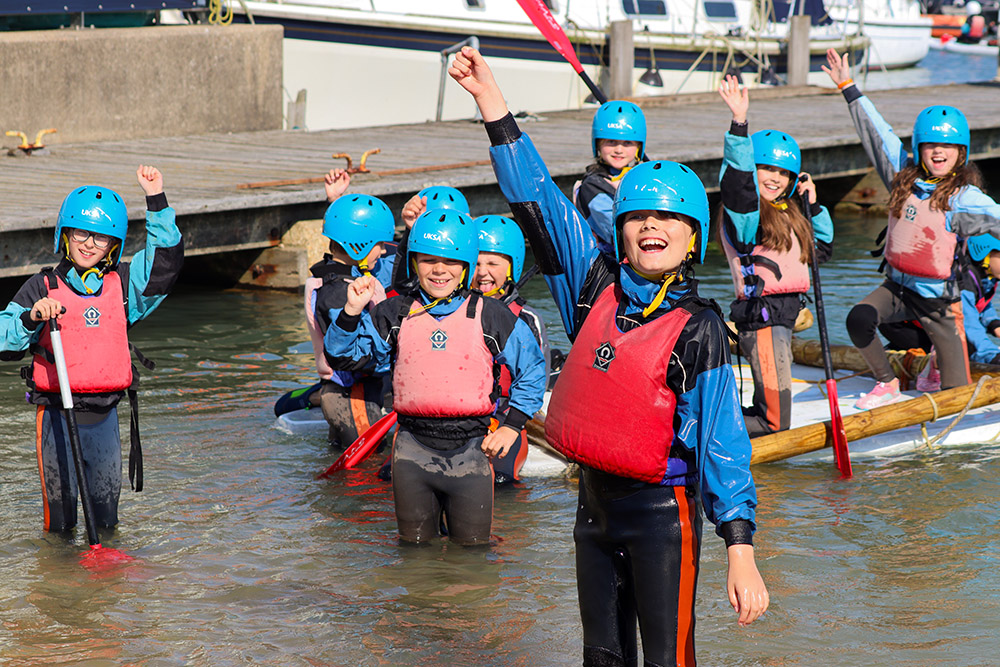
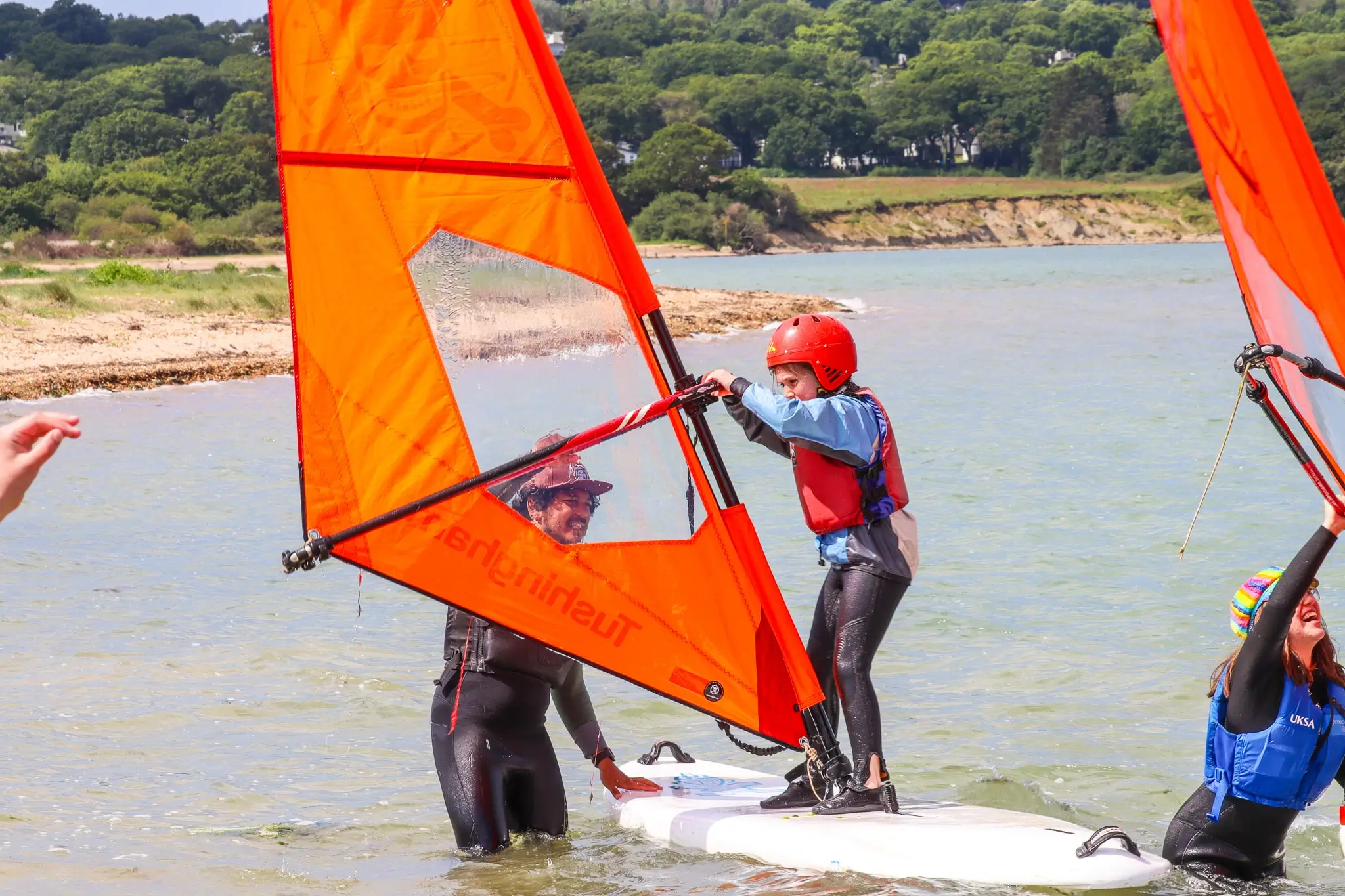
Sailing and raft building introduce pupils to teamwork and problem-solving in a more technical environment. Sailing activities often include learning how wind direction and weather conditions affect movement on the water, while raft building challenges pupils to design and construct a floating structure as a team.
These activities also link well to STEM learning, particularly in physics and engineering concepts such as buoyancy, force and design.
Key skills developed include:
- Basic sailing techniques
- Understanding wind and weather conditions
- Team planning and leadership
- Practical problem-solving and design thinking
Stand-Up Paddleboarding (SUP)
Stand-up paddleboarding has become increasingly popular in school residential programmes due to its accessibility and fun, engaging nature. It provides a gentle introduction to watersports while still building balance, coordination and confidence.
SUP sessions are often used as introductory activities or confidence-building exercises before progressing to more advanced watersports.
Benefits include:
- Balance and coordination development
- Confidence building on water
- Fun and accessible group participation
Coastal Watersports and Adventure Activities
For older students, coastal watersports provide a more challenging and adventurous experience. These activities are often based in seaside locations and can include a combination of sea-based and land-based challenges.
Some residential programmes include coasteering, sea kayaking, surfing or bodyboarding, depending on location and conditions. These experiences are particularly popular for secondary school groups looking for more demanding outdoor education trips.
Attractions such as the National Marine Aquarium or coastal field study centres are often combined with watersports residentials to enhance marine and geography learning.
Teachers frequently search for coasteering school trips UK and surf school trips UK when planning coastal residentials.
Watersports Residential School Trips
Watersports activities are often delivered as part of multi-day residential programmes, typically lasting between 2 and 5 days. These residentials allow pupils to fully immerse themselves in outdoor learning while developing independence away from home.
A typical watersports residential includes structured daily activity sessions, safety briefings, instructor-led learning and evening team-building activities. This balance of physical challenge and social development makes them particularly effective for personal growth.
Residential accommodation is often provided on-site at outdoor education centres or specialist providers, including organisations such as Rock UK, as well as youth accommodation providers like YHA (England & Wales) for more flexible or multi-location trips.
Watersports Trips for Primary Schools
For primary schools, watersports trips are designed to be fun, safe and confidence-building. Activities are carefully structured to ensure all pupils can participate, regardless of experience level.
These trips are especially popular for Year 5 and Year 6 residential experiences, often forming a child’s first extended stay away from home.
Key focus areas include:
- Safe introduction to water-based activities
- Building confidence and independence
- Encouraging teamwork and participation
- Creating positive first residential experiences
Watersports Trips for Secondary Schools
For secondary schools, watersports residentials are often more challenging and physically demanding. These programmes are designed to push students further while still maintaining safety and structured learning outcomes.
They are commonly linked to KS3 and KS4 outdoor education programmes, as well as preparation for awards such as the Duke of Edinburgh Award.
Key focus areas include:
● Advanced water-based challenges
● Leadership and team development
● Problem-solving under pressure
● Personal resilience and growth
Curriculum Links and Learning Outcomes
Watersports school trips are not only physical experiences, they also support a wide range of curriculum areas, making them valuable for schools looking to justify educational outcomes.
They link particularly well to:
- Physical Education (PE)
- Geography and environmental studies
- STEM learning (force, buoyancy, design)
- PSHE and personal development
These links make watersports residentials a strong choice for schools aiming to combine curriculum learning with outdoor adventure.
Start Planning a Watersports School Trip
Watersports school trips offer a powerful combination of adventure, teamwork and personal development, making them one of the most engaging types of residential experience for pupils.
If you are searching for watersports school trip ideas, kayaking residential trips, or water-based outdoor education programmes, Educational Visits UK can help you explore trusted providers and plan the perfect trip for your group.
See more School Trip Ideas